


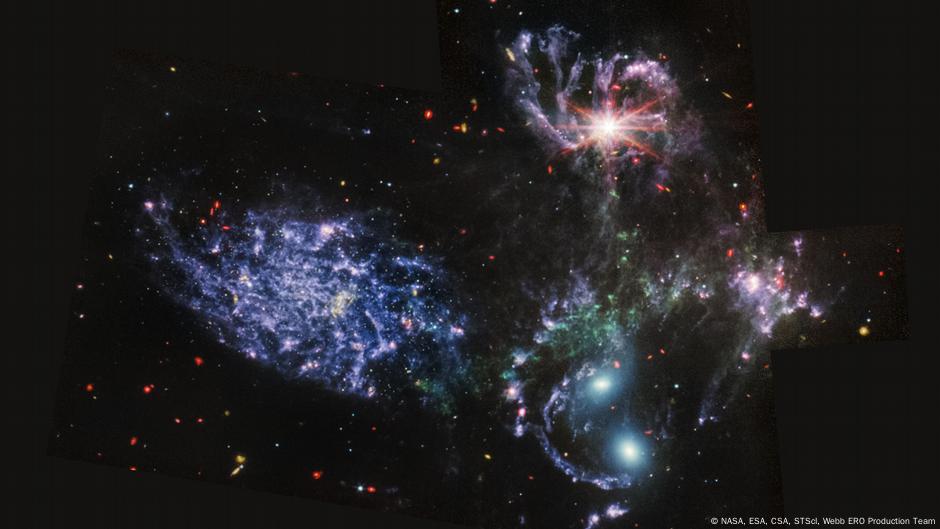
Galaxies are significantly larger than initially estimated, stretching far into the vast expanse of space - to such an extent that the Milky Way likely has interactions with our nearest neighbour, Andromeda.
You may think reaching the drug store is a long way, but that's just a small fraction of the distance to space.
The universe is vast. We inhabit a single small planet revolving around a star located in a distant region of a galaxy, which is just one of approximately 2 trillion galaxies in the observable universe.
.
We understand the dimensions of our Earth — approximately 12,756 kilometers (7,926 miles) in diameter. Similarly, we are aware of the scale of our sun, which measures around 1,391,000 kilometers (864,400 miles) in diameter.
How large is the Milky Way? Up to this point, the actual size of galaxies has remained unclear.
Galaxies have more impressive size scales than was previously believed
Astrophysicists have made a groundbreaking discovery, concluding that galaxies are substantially more extensive than previously believed, potentially several orders of magnitude larger.
The spiral structure of our galaxy, as we know it, is actually just a relatively small core of the full galaxy. This smaller core, which is the spiral structure of the Milky Way, spans approximately 100,000 light-years across.
The starlight from stars situated in the spiral arms reaches out as far as about 7,800 light-years into outer space, an area previously believed to be the boundary where a galaxy ceased and deep space started.
The study has found that extensive "halos" of gas stretch far beyond the visible spiral arms of stars deep into the vastness of space.
These gas halos only became visible to astronomers with the help of new imaging techniques. The methods allowed astronomers to discover galaxy gas halos over 100,000 light years into deep space, substantially increasing our estimates of the size of galaxies.
Kissing galaxies
.
According to lead researcher Nikole Nielsen of Swinburne University, Australia, studies indicate that our Milky Way is probably interacting with its nearest neighbour, Andromeda - located approximately 2.5 million light years away.
We're now seeing the galaxy's sphere of influence come to an end, where it meets and merges with the surrounding universe, and eventually, into the larger cosmic web of other galaxies. These transitions typically have somewhat unclear boundaries.
Experts assert that this detection will significantly contribute to our comprehension of one of the most fundamental enigmas in astrophysics: the process of how galaxies develop and change over time.
Elaboration on merging galaxies and triggers for star formation within them —, or those that no longer form stars — will help understand how galaxies gain mass over time and how their intergalactic interactions affect one another.
Edited by: Andreas Illmer
Primary source:
Author: Fred Schwaller
0 Komentar