


The year 2024 may have been a generally challenging one for many watch brands, but it hasn't stopped Omega from going all in on meteorite dials - a match made in heaven for a brand intrinsically linked with space. It was, after all, the first watch brand to be worn on the moon, back in 1969.
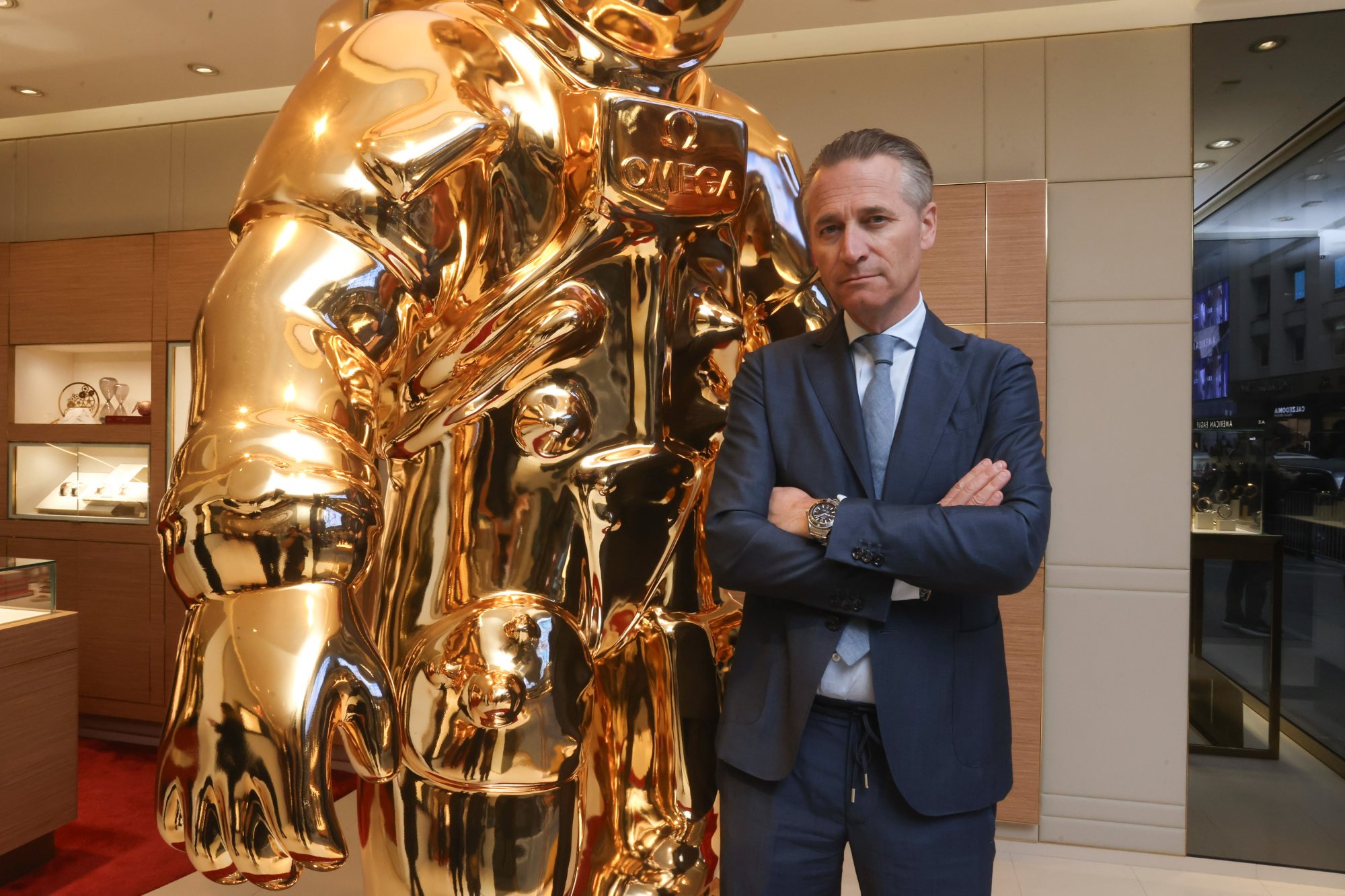
"Meteorite dials are unique, which adds a lot of value," says Raynald Aeschlimann, president and CEO of Omega, which has made full meteorite dials since 2016. In 2024, it has now dialled up the colour, with different hues applied to the meteorite.
He says the colours make meteorite trendier, more stylish, more fashionable. "The beautiful structure of the natural so-called WidmanstAtten criss-cross pattern is highlighted by the colours," Aeschlimann says, noting that the coloration also makes the overall appearance a little less technical. "It is an interesting effect, especially with the contrast of a polished Constellation case."
, our new platform of curated content with explainers, FAQs, analyses and infographics brought to you by our award-winning team.
The colours - applied either by galvanisation or physical vapour deposition (PVD) - lend a different accent to the raw mineral criss-cross patterning of meteorites with a high iron content. Omega also timed the collection to chime with the big colour trend of autumn/winter 2024 - burgundy. The other shades - grey, blue, green, gold, white, brown, black - also fit the season's palette.
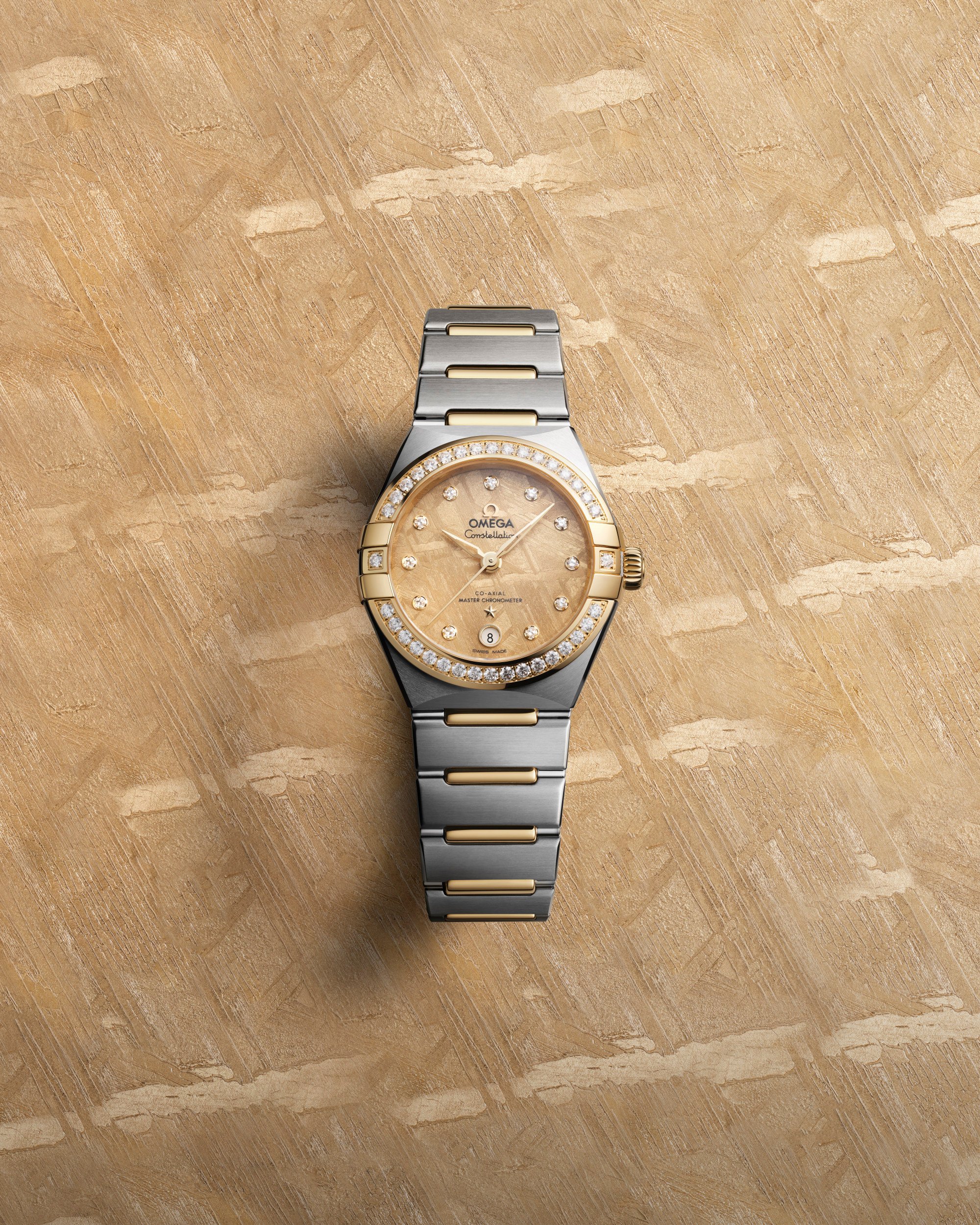
Apart from the colours, the nature of the material makes each meteorite dial unique. Aeschlimann admits that it is a big challenge working with meteorite, though, as getting the ideal size and quality isn't easy, and it must also fit with the overall design of the watch.
The dials from this release are cut from the Muonionalusta meteorite, which slammed into northern Sweden about a million years ago. The iron-based meteorite itself is much older: at around 4.5 billion years old, it is recognised as the oldest meteorite to have fallen to Earth, and has been used by several brands.
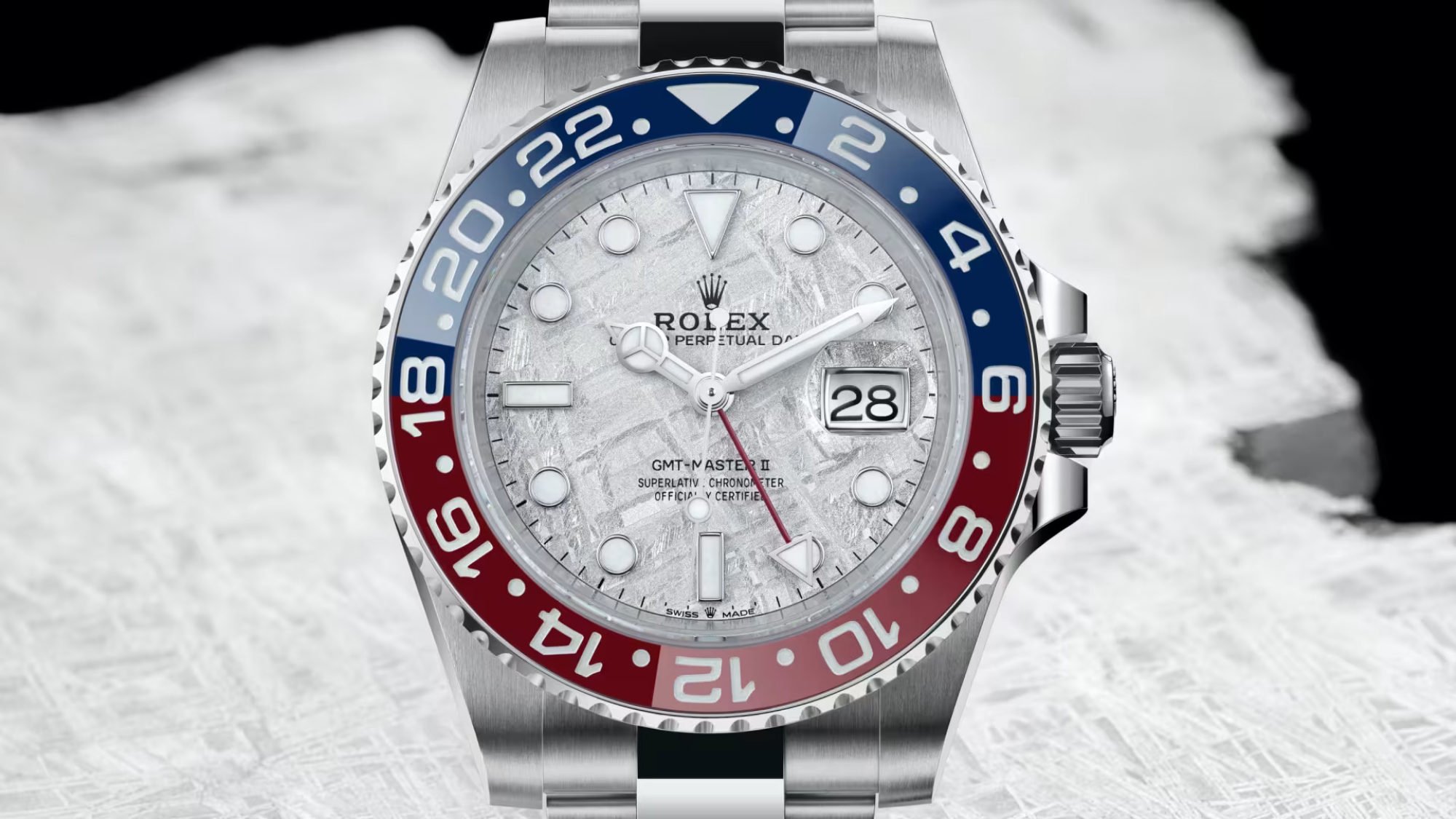
The use of meteorite in the watch industry is very recent. Corum pioneered such dials in a handful of watches in the 1990s, and Rolex cut a series of dials back in 2002 from the Gibeon meteorite, which is also iron-based. This younger, four-billion-year-old meteorite, found in Namibia in 1838, is the watch industry's most popular. A plethora of brands have gone through the painstaking process of cutting thin slivers of the material, including Omega for its 2016 Grey Side of the Moon.
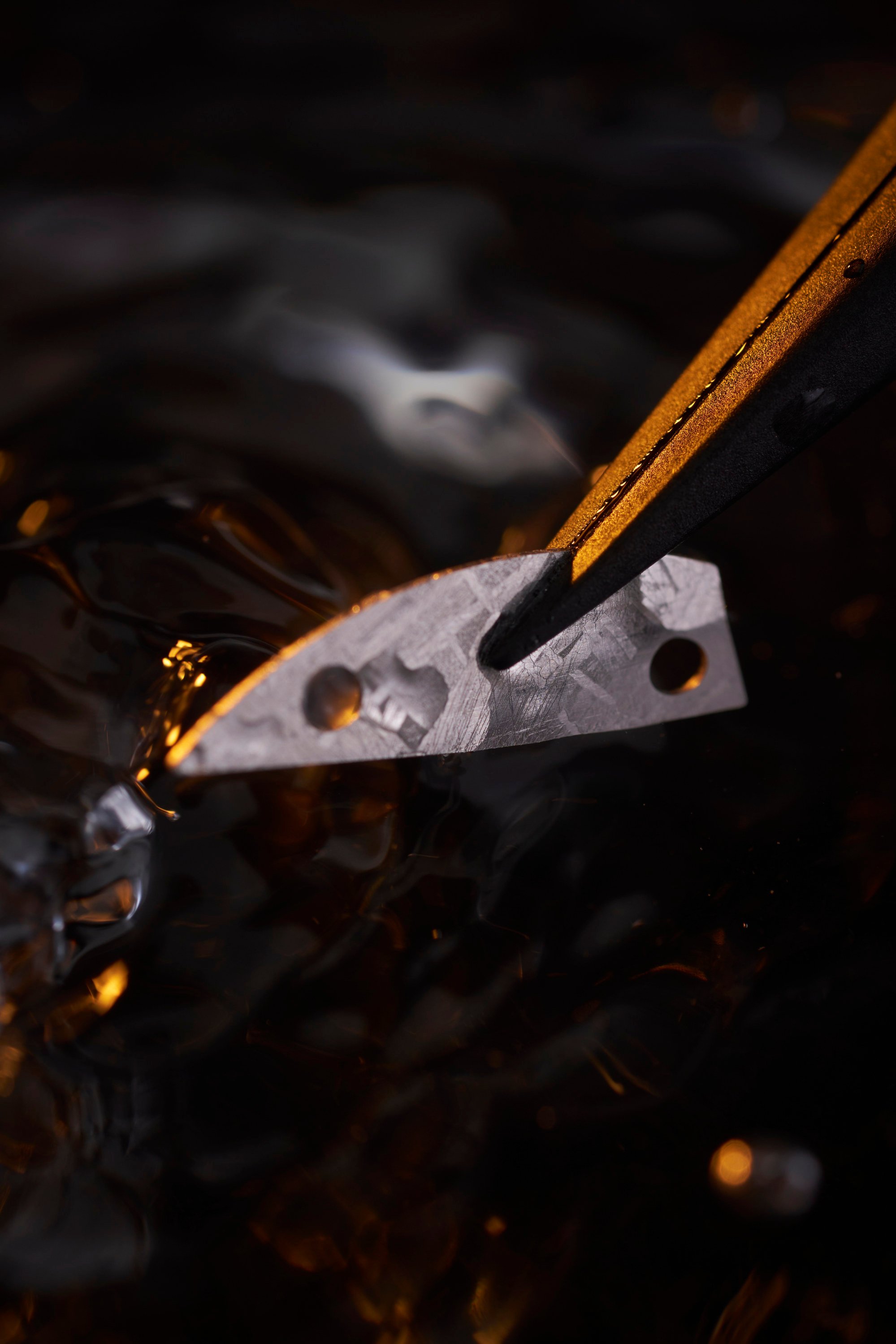
For a dial, a 0.1mm sliver is normally used. After being cut, it is polished flat before being acid etched, which brings out the contrasting alloys and minerals for a stronger pattern.
In 2019, Rolex used the interstellar material on the GMT-Master II, adding fresh detail to the Pepsi-coloured configuration. Clearly it went down well as Rolex retains a silver-grey, raw look for its meteorite dials until today - as seen on a Daytona model worn by 2023 and 2024 Wimbledon winner Carlos Alcaraz at his prize-giving ceremony.

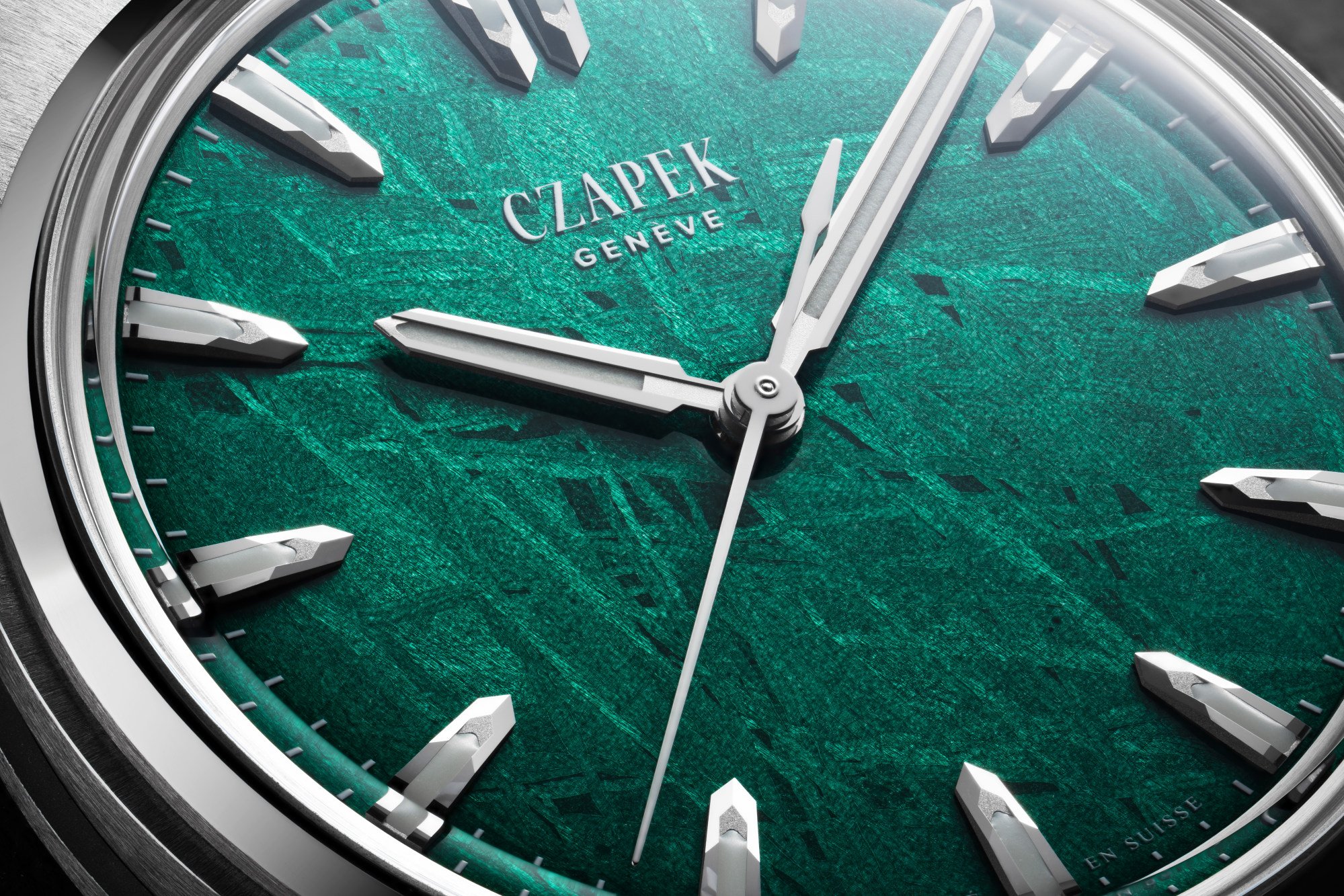
In contrast, the green hue used by independent brand Czapek on its 40.5mm stainless steel Antarctique Green Meteor has a touch of blue in it for added depth. Here, the colourisation of the Gibeon meteorite dial has been achieved by lacquering and polishing in 14 layers, according to CEO Xavier de Roquemarel. "To use colour on the meteorite is a logical evolution of the material. The natural grey is used so much. Now that we finally found the time to make a watch with a Gibeon meteorite dial, we wanted to show that we could go further," de Roquemarel said of the model, 100 of which will be made.
So could meteorite even increase its regard in the hearts and minds of collectors for Girard-Perregaux? In 2022, Patrick Pruniaux bought the brand, which dates all the way back to 1791, from the Kering Group, granting it independence once more. On the Free Bridge Meteorite released in February 2024, two bridges are highlighted using plates of Gibeon meteorite for a crisp design update.
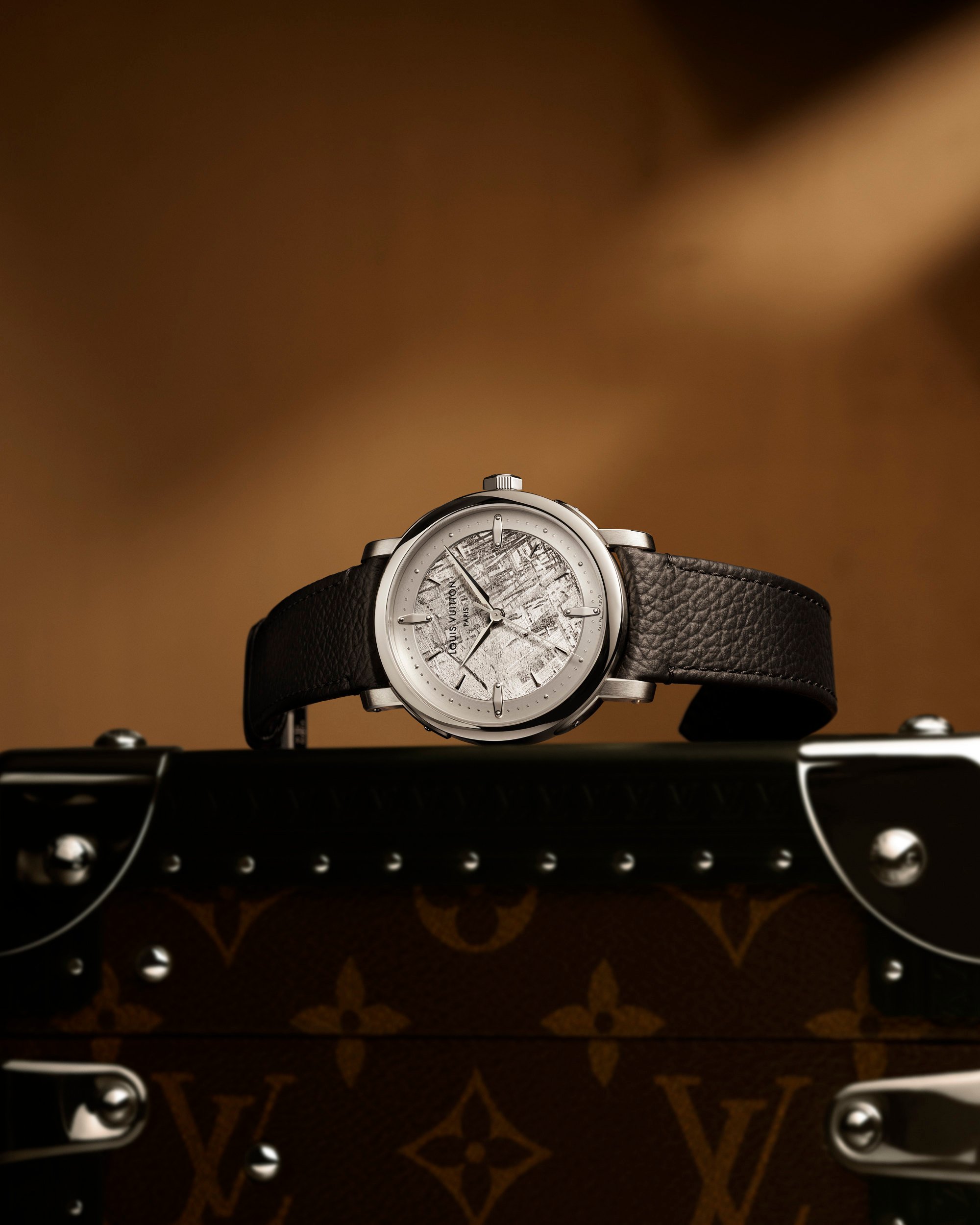
Another fashion-meteorite connection can be seen in one of the six new Louis Vuitton Escale models introduced this summer, a sign of the luxury brand's ongoing upscale direction in watchmaking. On the Escale, the meteorite dial is attached with rivets, reminiscent of those used on the classical trunks made by the brand, expanding the watch's storytelling element.
It's worth noting that not every brand using meteorite is so high-end: microbrand Selten, at the other end of the price scale, also uses slices of Gibeon but retails for under US$1,000.
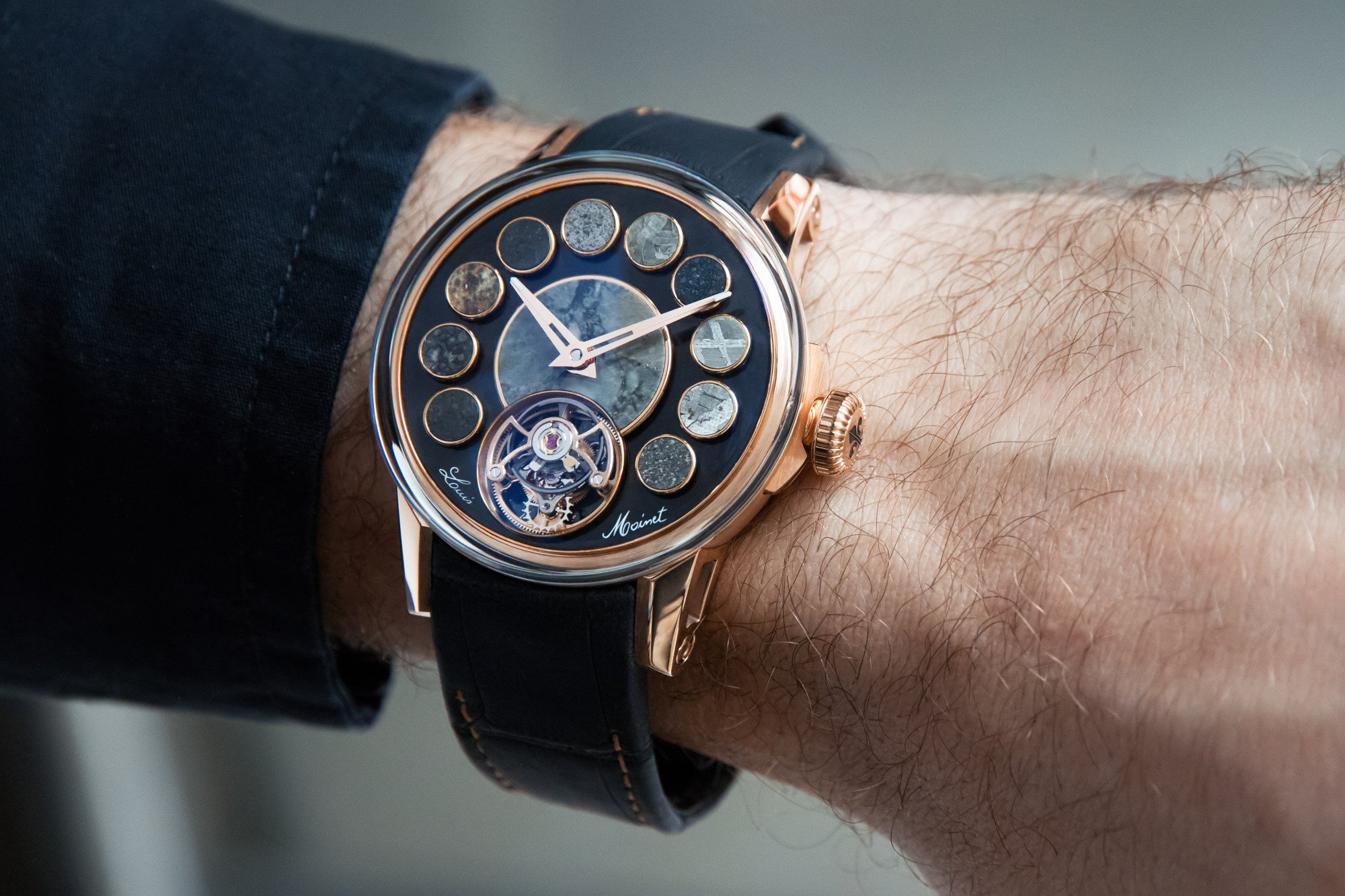
Another smaller name, well established with watch aficionados, but a well-kept secret from the mainstream, is Louis Moinet. This wildly creative Swiss brand, named after the inventor of the chronograph, bases its top-notch horological creations on two pillars: mechanical wonders and cosmic art. The latter is based on meteorites and flown materials. In October 2023, Louis Moinet received a Guinness World Record for the Cosmopolis which features inserts from no less than 12 different meteorites.
"I have collected meteorites for 20 years," says CEO Jean-Marie Schaller. In the 2024 production, which totals around 350 watches, he highlights two new meteorite creations. The first, the Louis Moinet Black Moon, has a movement featuring a moon phase indicator on a circling, domed centre disk adorned with two lunar meteorites. One of them was found in Libya, the other in Oman.
"Normally lunar meteorites are all black, but the one from Libya has marbled greyish tones," Schaller says.
The second is the Louis Moinet Fuego Nuevo, which has a new type of meteorite dial with laser engraving on a sliver cut from the Muonionalusta, the same meteorite used for the Omega Constellation. "We actually tried with Gibeon first, but it was a failure when we engraved it - it did not allow all the details to come out," says Schaller of the dial depicting the Piedra del Sol, the Sun Stone, one of the most emblematic works of Aztec art. "In the end a watch has to tell a beautiful story."
More Articles from SCMP
Hong Kong’s Kai Tak Sports Park passes biggest test yet as 63,000 join drill
China’s push for hi-tech dominance, Trump’s hopes for Sino-US ties: SCMP daily highlights
SCMP Best Bets: Purton set to be punter's pal on debutant down Sha Tin straight
Hong Kong’s John Lee visits Hung Hom, Ho Man Tin ahead of Lunar New Year
This article originally appeared on the South China Morning Post (www.scmp.com), the leading news media reporting on China and Asia.
Copyright (c) 2025. South China Morning Post Publishers Ltd. All rights reserved.
0 Komentar