


Perspectives on Gender Equality and Bonus Systems
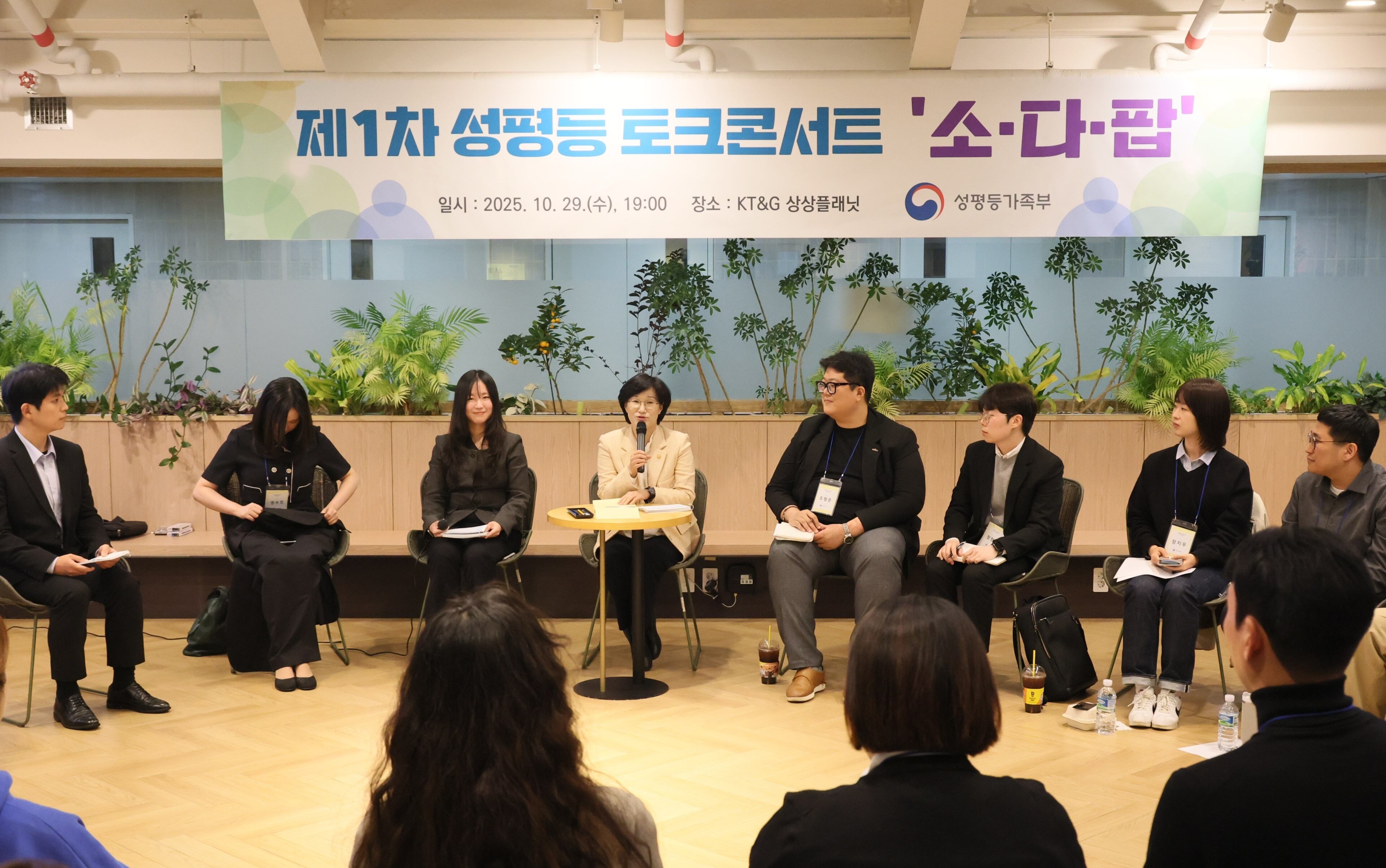
During a recent event hosted by the Ministry of Gender Equality and Family, participants shared their views on gender discrimination and the role of bonus systems in addressing these issues. The talk concert, named 'Soda Pop,' took place at the KT&G Sangsang Planet building in Seoul’s Seongdong District. It aimed to gather insights from individuals in their 20s and 30s, including university students, office workers, and cultural professionals.
One of the key topics discussed was the female bonus system, which provides additional points to women in various fields such as film scenarios and procurement markets. Kim, a man in his 30s, questioned the effectiveness of this policy. He argued that while there may be fewer female directors and protagonists in the film industry, giving bonus points to women could be an administrative shortcut rather than a solution for true gender equality.
Jang, another participant in his 20s, criticized the fairness of the female bonus system in the procurement market. He mentioned that some male entrepreneurs exploit the system by establishing companies under their spouse's name. Instead of offering bonuses to female-owned businesses, he suggested rewarding companies that actively hire more women.
Lee, a man in his 20s, also voiced concerns about the continued relevance of the bonus system. He noted that while the system was necessary in the past due to a male-dominated society, current improvements in gender equality education might make it time to reconsider its maintenance.
However, not all participants were critical of the bonus system. Seok, a man in his 30s, supported the system, stating that men are more active in certain industries, and female entrepreneurs face significant challenges. He emphasized the need for ways to prevent abuse of the system while acknowledging its value.
Safety Concerns and Daily Experiences
While male participants focused on the implications of the bonus system, female participants shared their experiences with daily threats to their safety. Nam, a self-employed woman in her 30s, described instances of sexual harassment and violence from older male customers. She highlighted the vulnerability of solo shop owners, who often find themselves in confined spaces with no easy escape.
Many female self-employed individuals face stalking, with customers following them home. Even though her home is only a 10-minute walk away, she always takes a different route to ensure her safety.
Generational Influence on Gender Conflicts
Both male and female participants agreed that older generations contribute to gender conflicts among the youth. Kim, a man in his 30s, pointed out that gender discrimination issues stem from structures created by previous generations. He felt that telling young men they are responsible for these issues makes them feel that they did not create the structure.
A woman in her 30s, also named Kim, echoed this sentiment. She emphasized the need for changing traditional values, especially when discussing the challenges of pregnancy, childbirth, and childcare. Some older women still say, “I sacrificed everything to raise my kids,” highlighting the need for a shift in societal norms.
Military Service and Gender Discrimination
The topic of military service, often cited in discussions about male discrimination, was barely addressed during the talk. Only An, a man in his 20s, mentioned it after 1 hour and 40 minutes into the discussion. He noted that people often say it is natural for men to serve because women give birth and do not go to the military.
Won Min-kyong, the Minister of Gender Equality and Family, who attended the event, emphasized that the purpose of the talk concert was to start a conversation rather than reach conclusions. He encouraged participants to comfortably share their experiences of imbalance.
The ministry plans to hold four more gender equality talk concerts for young people, starting with this event. These discussions aim to foster a deeper understanding of gender issues and promote meaningful dialogue among participants.
0 Komentar